
PCB Refuses NOCs for Pakistani Players in APL 2026
The PCB will not issue NOCs to Pakistani players for APL 2026, shutting out 30+ registered players — while Mohammad Amir, as a British citizen, stays in.
Wasim Akram has turned down a mentor role in the Afghanistan Premier League, reports said on Thursday, 5 November 2026, choosing not to go against the policy of the Pakistan Cricket Board as the league's return gathers pace.
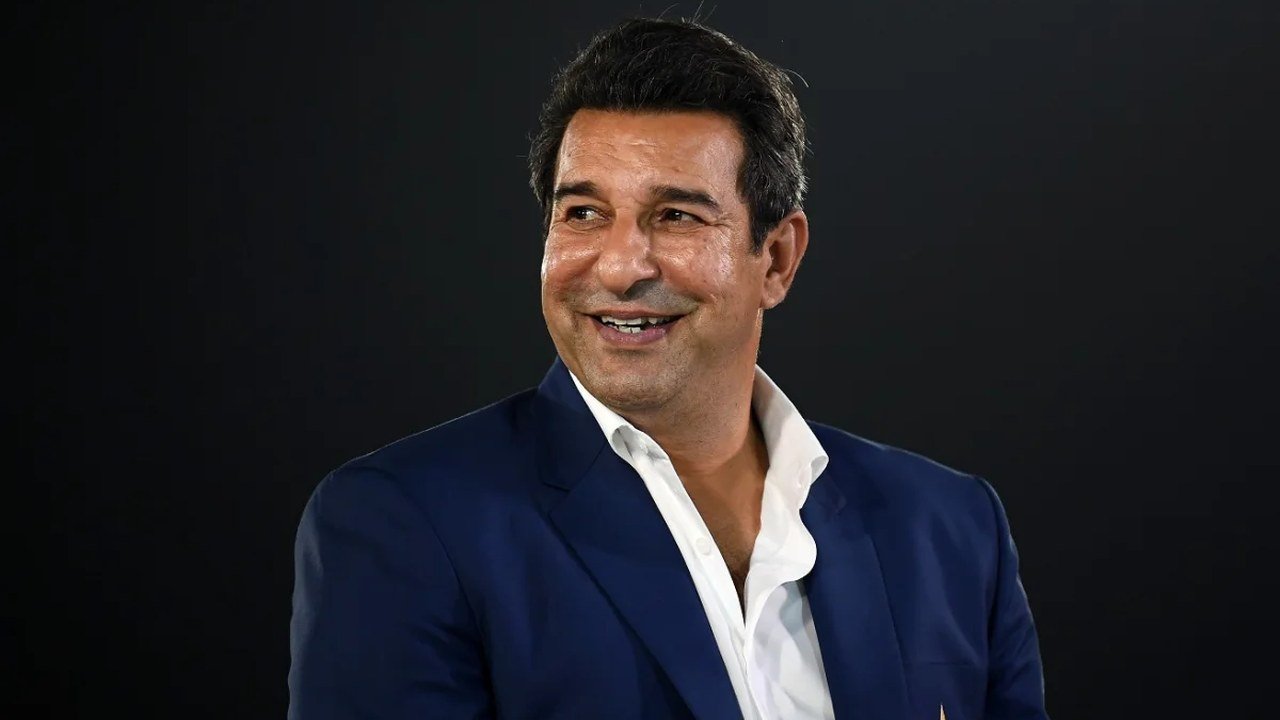
Wasim Akram has turned down a mentor role in the Afghanistan Premier League, reports said on Thursday, 5 November 2026, choosing not to go against the policy of the Pakistan Cricket Board as the league's return gathers pace. The former Pakistan captain was offered a place on the support staff of one of the five franchises, but he decided against taking it, leaving the league's mentor chairs exactly as the Afghanistan Cricket Board announced them earlier in the week.
According to reports, the offer Akram received was a lucrative one, made by one of the five participating teams rather than by the league itself. The reporting is based on sources rather than any public statement, and the franchise behind the offer has not been named. What is consistent across the reporting is the reason: Akram did not want his name attached to a tournament that the PCB has effectively closed to Pakistan's cricketers, and he chose to stay in step with the board's position instead of taking the role. It was a quiet no to a high-profile chair, delivered without a public statement of his own.
The backdrop is the PCB's decision, confirmed on the same day, not to issue no-objection certificates to Pakistani players for the APL. More than 30 Pakistan cricketers had registered for the draft, and none of them was picked, with the uncertainty over NOCs hanging over the whole process. The one exception proved the rule: Mohammad Amir, the former Pakistan fast bowler, was taken by Kandahar Warriors as their first platinum pick only because he entered the draft as a British citizen, having acquired UK citizenship earlier this year. Against that background, a mentor's chair would have put Akram in the same awkward position as the players the board had already ruled out, and the reports say he decided the offer was not worth that contradiction.
Akram's name was never part of the mentor lineup the ACB confirmed on 2 November, and his decision changes nothing about it. Irfan Pathan will mentor Kandahar Warriors, Mark Boucher takes the same role with the Nangarhar franchise, Waqar Younis is with Paktia, Tillakaratne Dilshan is with Balkh, and Nikhil Chopra is with Akcel United Kabul. The captains working alongside them are Rashid Khan, Azmatullah Omarzai, Rahmanullah Gurbaz, Rahmat Shah and Ibrahim Zadran. It is a star-studded group, and the franchise that approached Akram was evidently hoping to add the biggest name of all to it. The five chairs are filled, the structure is set, and the league moves on without him.
Few figures in the game could have offered what Akram would have brought to a dressing room. He is the left-arm fast bowler known as the Sultan of Swing, the man who starred in Pakistan's 1992 World Cup triumph and went on to take 414 wickets in 104 Tests and 502 wickets in 356 one-day internationals, becoming the first bowler to reach 500 ODI wickets. He was inducted into the ICC Hall of Fame in 2009, and his mastery of reverse swing changed what a fast bowler could do with an older ball. He has also worked as a bowling coach and mentor in the Indian Premier League, so the APL role would have been familiar territory rather than a new departure. For a young Afghan attack, an hour with him would have been a masterclass; for the league, his name alone would have carried weight.
Nothing about the schedule changes. The league begins on 27 December 2026 in the United Arab Emirates, its first season since 2018, with five teams carrying squads of 18 players, including 11 to 12 Afghan and six to seven overseas players. The players' draft was held on 3 November in Dubai, where close to 1,500 registered players had been trimmed to a final list of 462, picked across five categories from Platinum down to Emerging. The mentor chairs are settled, the squads are built, and attention now turns to the cricket itself, with Akram watching from the outside rather than from a dugout.
Reports say Akram was offered a mentor role by one of the five APL franchises and declined it because he did not want to go against the PCB's policy. The board had decided not to issue no-objection certificates to Pakistani players for the league, and Akram chose to stay in step with that position rather than take the role.
The team has not been publicly named. Reports say the offer came from one of the five participating franchises, but neither the franchise nor Akram has confirmed it publicly. What is known is that the offer was described as a lucrative one, and that Akram turned it down on Thursday, 5 November 2026.
The Afghanistan Cricket Board confirmed the five mentors on 2 November 2026. Irfan Pathan is with Kandahar Warriors, Mark Boucher is with the Nangarhar franchise, Waqar Younis is with Paktia, Tillakaratne Dilshan is with Balkh, and Nikhil Chopra is with Akcel United Kabul. Wasim Akram is not among them.
The league begins on 27 December 2026 in the United Arab Emirates, its first season since 2018. Five teams will take part, with squads of 18 players picked in the draft held on 3 November in Dubai. The mentors, head coaches and captains for all five franchises were confirmed on 2 November.
The PCB will not issue NOCs to Pakistani players for APL 2026, shutting out 30+ registered players — while Mohammad Amir, as a British citizen, stays in.
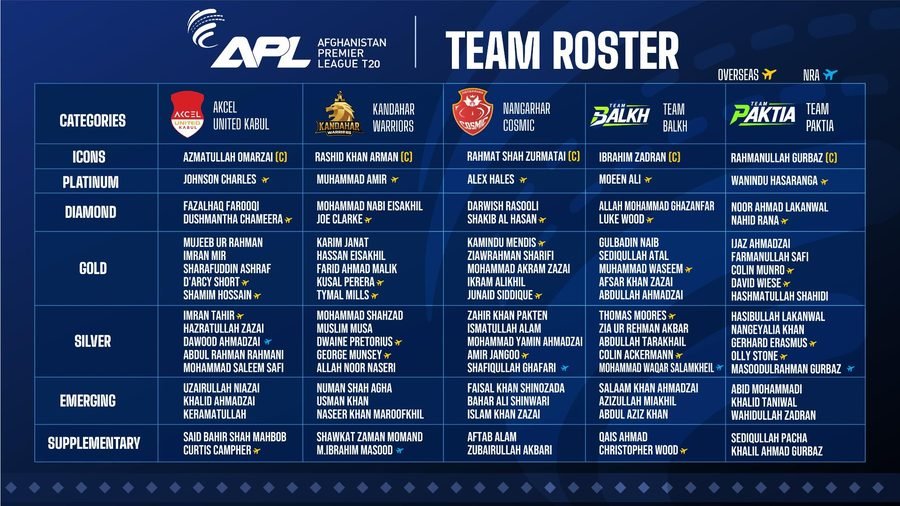
APL T20 2026 draft results from Dubai: 90 players from a pool of 462, Muhammad Amir the first pick, and every Platinum and Diamond selection, per the ACB.
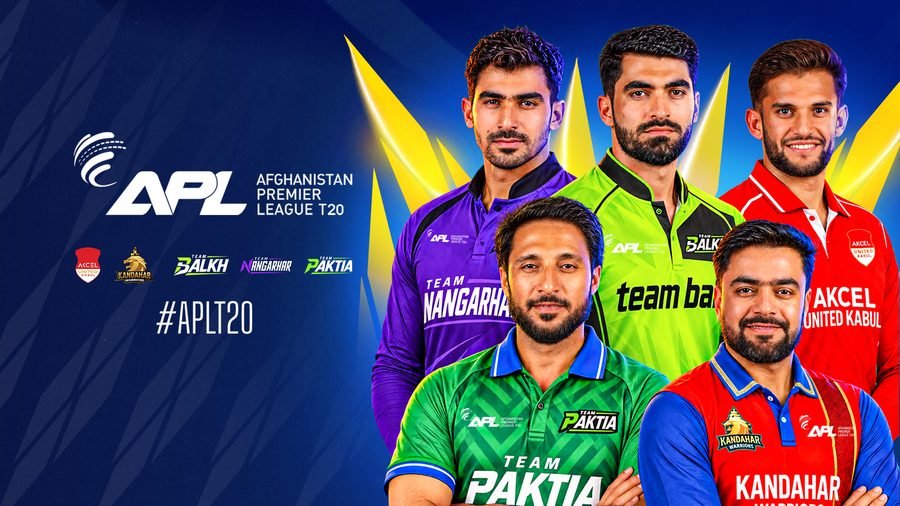
Rashid, Omarzai, Ibrahim, Rahmat Shah and Gurbaz arrive at the APL with different tools and one shared problem: no squad list yet.